
How Automation Protects Revenue When Staff Capacity Is Stretched

How Automation Protects Revenue When Staff Capacity Is Stretched

Anyone who has ran (or, for an even greater challenge, started up) an independent gym or fitness club knows that members leaving isn’t the only thing threatening to damage your revenue streams.

Whether it is losing out on membership fees because failed payments sat unchased for three weeks, an access card was never updated after a membership change, or a wait-listed member never got the email that a space had opened up. There is unfortunately many opportunities for money to get left on the table.

Worse still, revenue leaks can be hard to spot at the best of times, and even harder to spot when a gym’s staff are stretched to capacity.

Every operator working in our industry knows how these gaps start. All it takes is a couple of staff on annual leave, followed by someone calling in sick. It might not even take that, it could just be a particularly busy point of the year with a particularly lean team.

But unfortunately gym admin is rarely considerate enough to pause while you address the backlog, and if it does that might be a sign that there is whole other problem to deal with.

Even with parts of the team out of action, payments still need collecting, failed payments still need following up, new members still need to be able to join. Access still needs updating the moment someone’s status changes. None of it waits for a calmer week, because a calmer week rarely comes.

Manual Admin is only a short term solution

Manual admin errors tend to fall into one of a few categories. Whether it is a batch of reminders that never get sent, access permission that never get revoked or a membership change that gets hastily written down on a post-it note and then forgotten. Each one is understandable, but not only can each one cause frustration, they can each represent a potential loss in revenue.

It is easy to underestimate how quickly it can all add up. A single missed follow-up for a failed payment could cost a gym £30 for a month. Multiply that across even a few dozen ‘failed’ members over a full year, and it becomes one of the largest unplanned losses for a fitness business.

Certainly not a loss that can be taken lightly for many fitness businesses in this challenging economy.

So today we are going to look at how ensure your revenue is protected and the cash keeps flowing.

Payment collection cannot depend on who is in the gym

Direct Debit collection should be the single biggest revenue process in any fitness business, but it is also one that can be easily neglected when a team is stretched. If payment are processed manually, or depends on someone remembering to check a report, something will eventually be missed. It won’t necessarily be down to carelessness, but because payment collection and processing competes for attention with members standing at the desk, phones ringing, and problems that need solving on the gym floor.

Automated Direct Debit collections effective remove that dependency entirely. Now instead of relying on in-facility staff, payments go out on schedule regardless of who is on shift, unaffected by who calls in sick, or goes on holiday, or even how busy the site gets. The process does not need a person to remember it exists. This alone protects more revenue than almost any other single change an operator can make, because it takes the most valuable process in the business out of the hands of an already-stretched team.

Failed payments need chasing

Too often we have found independent gyms that approach a failed payment as a write-off in the making. And we can understand why, chasing takes time. Time that most independent gyms and their staff don’t have.

But there is often a fairly valid reason behind why their members have defaulted, it isn’t uncommon to find that they still want to be a member and that their card had either expired or just had insufficient funds on the day.

So whether our theoretical independent gym collects these missed payments depends entirely on what they do next. If their follow-up happens within a day or two, most of these payments are recovered without friction. If it happens later, there is a greater potential for confusion and discomfort on the part of the member.

Unfortunately these are the sort of tasks that are easy to justify putting on the backburner when a gym is busy. We tend to deal with the problems in front of our eyes.

But it is a task with a shelf life, which is why so many independent gyms and fitness clubs have benefitted from entrust their payment collection and debt recovery to a third party company.

By ensuring that a team of trained professionals are able to chase any failed payments and outstanding member debts, it allows independent gym owners and their teams to focus on the problems in front of them and protects revenue that might otherwise disappear unnoticed into the “we’ll get to it later” pile.


Online joining should not depend on someone being free to process it

A prospective member who fills in a form in-person, or waits for a callback that doesn’t come for two days, is a prospective member who is currently also looking at other gyms in the area. The prospective member that finds a gym’s website online and signs up within the next hour is locked in, and so is their contribution to the gym’s revenue stream.  

Manual sign-up processes can work well enough in the early days when a team has spare capacity to process them promptly. But not only do they scale poorly, they are most likely to buckle during the busy periods.

Implementing automated Online Joining not only removes this bottleneck entirely, it frees up gym staff for other tasks. A new member can sign up, complete their Direct Debit instruction, and then gain access without the process requiring the immediate attention of a team member. It allows your members to sign-up in real time, whether it is 3pm on a Tuesday or 2am on a Sunday morning when everyone else is asleep. No enquiry sits in an inbox waiting for someone to have a spare ten minutes, the member and their payment details are in the system, waiting for you come morning.

Access control updates need to happen the moment a member changes their membership.

Access control is one of the places where any administrative delays and inefficiencies can become a visible, physical, often member-frustrating problem.

Whether it is a member who cancels but manages to retain access their access credentials, a member who upgrades but is still being charged the old rate or a member who upgraded but can’t get access to the full facility due to an admin error.

Each of these is a small operational failure with a direct cost, and each becomes more likely the moment a team is too stretched to manually cross-reference membership status against their access control system.

This is where Access Control’s integrated into membership management software can close the margin for error by linking entry directly to payment and membership status. When a membership changes, when a payment fails, or when a member cancels, access updates automatically.

With a system like this in place, nobody needs to remember to cancel specific aspects of a member’s access and nobody needs to manually check who is allowed through the door that day. The system reflects the current state of the membership in real time, something that matters most when staff have the least time to check it themselves.

Membership changes, class bookings and reporting all carry the same risk

Continuing along the same theme, this pattern has the potential to repeat itself across every corner of a gym’s administration.

It could be a membership downgrade logged in a spreadsheet, or a class booking taken over the phone and never entered, or a reporting task that gets pushed back a week, then another. These will all most likely seem sadly familiar to anyone who has worked in an independent gym or fitness club using manual administration.

But none of these tasks need to become a liability, especially when there is already more than enough for a gym’s staff to be attending to.

Automating membership means that any changes made, whether an upgrade, downgrade or freeze, takes effect immediately and therefore consistently, rather than depending on someone to input the necessary information manually across linked systems.

Meanwhile automating class bookings removes all sorts of busy work, a phone call here, a paper list there, to say nothing of the tedium of managing a manual waitlist. Instead members get to book, cancel and get notifications. A better service for less effort, with no control ceded by the gym owner or his team.

And Automated reporting means that accurate data is only a few clicks away, rather than the culmination of hours of reconciliation. All of this can make a massive difference when it comes to organising a proactive, responsive strategy to protecting your revenue while growing your fitness business.

Automation does not replace people. It protects the work that keeps the business moving

None of this is us making an argument for either cutting down on staff, or for treating members as cogs in a machine. Done well, the opposite is true, as automation can empower staff and allow members to be treated with more personal care.

When Direct Debit collection, failed payment follow-up, online joining, access control and reporting run automatically, staff are freed to do the parts of the job that genuinely require a person. Whether that be coaching, welcoming new members or resolving queries at the front desk.

Member Support exists for exactly this reason, sitting alongside automation rather than replacing the need for it. Automation handles the processes that can be standardised and need to be processed without error.

People handle the moments that require judgement, empathy or a decision that a system cannot make. The two shouldn’t be in competition. A gym with strong automation and a present, engaged team is in a far stronger position than one relying entirely on either extreme.

CrossFit Tyneside: Living proof that automation is essential

CrossFit Tyneside is one gym that has felt the practical difference this makes. Working with Ashbourne, the facility moved to an all-in-one membership management system that automated billing, payment tracking and renewals, alongside integrated member communication, and had it fully operational within a week.

CrossFit Tyneside felt the results of their decision immediately.

By introducing both automated billing and payment tracking, Ashbourne was able to reduce late payments and cut down on admin errors that had previously required manual attention.

Not only that, new members could sign up digitally and therefore immediately, getting instant access to the gym, rather than waiting for a staff member to process their details. Membership plans could be tailored to different member needs without creating extra administrative work for the team.

Ashbourne was also able to provide CrossFit Tyneside with a fully branded mobile app for their members, giving members a direct way to book and cancel classes, manage waitlists, track their progress and receive push notifications for announcements, promotions and class reminders.

This app was built for full integration with Ashbourne’s existing systems, giving CrossFit Tyneside the polish of a bespoke app without the cost or lead time of building one in-house.

Integrated access control removed the need for manual check-ins at reception altogether. Members simply use their membership card to enter, with the system instantly confirming their payment status and flagging any account that needs staff attention. The result was constant, secure access for members, a lighter workload at the front desk, and stronger peace of mind for staff and management, knowing the door only opens for members who are genuinely up to date.

As Andrew at CrossFit Tyneside put it: “Really, I struggle to fault the service.”

For any independent gyms or fitness clubs managing the same daily pressures, whether in staffing or in admin or making sure revenue is protected while a small team covers a great deal of ground, automation might be the answer.

And here at Ashbourne Membership Management provides the systems that keep these essential processes running, whatever the week throws at a team.

Whether it has been via installing and maintaining innovative access controls, chasing down non-paying members, or setting up a members mobile app, we have ensured that thousands of gym owners have the best tech, secured revenue, and fantastic customer service.

If you want to see how a company made by and for independent gym owners could help you deliver even more value to your members without losing any control over how your facility is run, don’t hesitate to book a demo with our in-house, UK based team today.

Fair Rates For Fitness

If you are reading this, you’ll forgive us if we assume you are someone who cares about the UK’s fitness industry. If so, there is something we’d like to mention, something important to all of us working and operating within the fitness industry.

Now that it is confirmed that the UK will find itself with yet another new PM, the time for the fitness industry to make our voices heard is now.

Here at Ashbourne Membership Management, we have been proud to work in this dynamic, innovative sector for three decades. At time of writing the UK government has decided to increase business rates as part of the latest budget. While we are always happy to pay our way, we believe that these rates do not acknowledge the incredible benefit that independent gyms and fitness clubs bring to society.

Every party manifesto claims that they want the people of the UK to be healthier, happier, and more active. But when the time comes to match action to rhetoric, our industry is too often left out. Andy Burnham or whoever is to become the next leader of the United Kingdom will have tough choices to make, and it is our job to highlight that this common sense policy will have fantastic benefits for people up and down the country.

So, if you want to make your voice heard alongside the hundreds who have already acted, follow the link here to Fair Rates for Fitness, a campaign being championed by our partners over at the Gym Owner’s Forum. 

More to Read...

Get your club in shape.

Want to discover how? Let us show you.

Simply select your preferred timeslot and we’ll be in touch to have a chat about your health club,
the goals you want to achieve, and how our system can help you.

Get your club in shape.

Want to discover how? Let us show you.

Simply select your preferred timeslot and we’ll be in touch to have a chat about your health club, the goals you want to achieve, and how our system can help you.

Get your club in shape.

Want to discover how? Let us show you.

Simply select your preferred timeslot and we’ll be in touch to have a chat about your health club, the goals you want to achieve, and how our system can help you.

Members Letting Their Friends Into Your Gym? – Combating Pass-Sharing with Smart Access Controls

Members Letting Their Friends Into Your Gym? – Combating Pass-Sharing with Smart Access Controls

Pass-sharing is a persistent challenge for independent gyms, leading to lost revenue, security risks and member dissatisfaction as well as a host of other issues

We here at Ashbourne Club Management have helped countless gyms counteract this over our twenty five years experience in the fitness industry. Our baseline Club Management software has helped eliminate Pass-Sharing entirely from many facilities when supported by the right technology.

This is the same software and technology we use in our own clubs. Because here at Ashbourne we aren’t just content to stay behind the scenes, we have experience running successful clubs and gyms and we have fed these experiences back into our software and hardware.

Not only that, our cutting edge suite of software makes identifying these Pass-Sharers easier than ever before.

So for today’s article we will be taking a look at a little case study using one of our partner gyms as an example. 

This case study examines how one gym successfully tackled pass-sharing by implementing strategic access control measures, supported by insights from Ashbourne Membership Management’s club management software, hardware and expertise.  


One of our partner facilities recently reported that two members were allowing five or six non-members to enter their facility overnight by exploiting the fingerprint scanner on the turnstile. A paying member noticed and complained, frustrated that others were accessing the gym for free.  

This is a frequent complaint when rule-abiding members identify that Pass-Sharing is occurring at a gym. It saps morale and makes them question the value of the service they are receiving if others are able to access it ‘for free’. 

Luckily for the gym, they were able to contact our 5-star-rated support team. Unlike many Membership Management companies, our Support team is in-house, meaning they are well-trained, well-connected and intimately familiar with our systems and services.

What Are The Key Issues We Identified?

Pass-sharing may seem like a harmless favour between friends, but for gyms and fitness clubs, it introduces serious operational challenges. When left unchecked, it undermines not only a facility’s financial health but also its overall integrity and member trust. Below are some of the most pressing issues that arise when pass-sharing is allowed to persist:

Unauthorised access – Non-members entering without contracts or liability waivers.

This presents a number of issues regarding security and loss of revenue, as well as representing a breach of contract by the existing member. 

Member dissatisfaction – Paying members felt cheated, risking retention and negative word of mouth.   

Security gaps – Lack of real-time monitoring allowed the issue to occur and persist.  

Our Solution to Pass-Sharing

To address this, our support team enacted the following measures for the Gym in question:

Our Support Team Remotely Applied A Turnstile Lockout Period to the Access Controls of the Facility

– A 3-minute lockout was added to the fingerprint scanner, preventing multiple swipes in quick succession. As we install our own fingerprint scanners, this could be done quickly and efficiently.

– As a result, this stopped members from repeatedly scanning to let friends in while still allowing legitimate re-entries (This could include forgetting something in the car or dropping something before going through the turnstile).

“Blocked Member” Status

– A new membership category was created, allowing the gym to immediately revoke access without canceling payments or alerting the member.

– This gave management time to investigate and address the issue directly with the member before deciding on further action.

Why Did These Solutions Work?

Our expertise and faith in our systems meant that we had no reason to doubt these measures would be successful. Through use of biometric scanners, data-driven investigation and security protocols we have helped block Pass-Sharers for our partner gyms countless times in the past.

But we believe in showing our workings, the reason these measures were effective can be found below: 

Data-Driven Access Control

– The identification of members likely to be Pass-Sharing has been achieved through entry pattern analysis through our BI Dashboards, a method Ashbourne recommends for detecting suspicious behaviour through member access data.

– Unusual entry frequency (such as multiple scans in a short time) was flagged as a red flag for potential pass-sharing to be investigated. Multiple offenders could be isolated, filtered and dealt with swiftly and with minimal manual searching.

Proactive Membership Management

– The “blocked member” feature allowed discreet intervention, preventing escalation while maintaining member relations.

– This aligns with Ashbourne’s principle of shifting from reactive to proactive enforcement.

Deterrence Through Technology

Fingerprint scanners, as Ashbourne notes, are a key deterrent to pass-sharing. This is because biometrics are much harder to share than key fobs or PINs. 

– Any attempt to circumvent them, as seen in this case study, are usually very easy to spot either within the facility itself or by interrogating the entry data.

– The psychological barrier of needing the actual member present discourages abuse. Members are most likely to Pass-Share if they believe there is very little chance they will be caught. Being physically present makes it an inherently riskier act than giving someone your key fob.  

Results & Broader Implications

– Reduced unauthorised entries – The lockout period made it nearly impossible for groups to enter on a single scan. 

– Improved member trust – Paying members saw that the gym took their concerns seriously. 

– Scalable security- The solution can be adapted for other access points (Example: QR codes, key cards).

Guidance for Any Gyms Who Suspect or Know they are Facing Similar Problems

But that doesn’t mean it has to. Ashbourne has helped many clubs and gyms transition to the 24/7 model. When done properly and backed up by the correct technologies and procedures, Pass-Sharing can be effectively eliminated even in an unmanned gym or club.

Key takeaways from our Case Study:

  1. Monitor entry data – Look for irregular patterns using BI Dashboards and Access Control Monitoring (example: frequent re-entries). 

  2. Use biometrics where possible – Fingerprint scanners significantly reduce fraud, making the paying member a requirement for entry. This makes it easier to spot the offending party and prove they had knowledge of the transgression.

  3. Implement flexible member controls – Temporary access blocks allow for investigations without immediate termination.  

Conclusion

The situation our partner gym was in and how we were able to resolve it demonstrates how a combination of smart technology and responsive membership management can effectively combat pass-sharing. By adopting Ashbourne’s data-driven approach, gyms can protect revenue, enhance security and prevent dissatisfaction among your paying members.

Interested in learning more? Worried YOUR members might be Pass-Sharing?

If you are a gym or club owner or manager facing a similar issue, or even worried that your facility might be facing similar issues that you aren’t even aware of, we hope this case study proves that Ashbourne can help. 

While problems like Pass-Sharing can seem insurmountable, we here at Ashbourne club management have been providing club and gym owners the tools, technology and training to combat these issues for over twenty five years.  


By following the link here you can arrange a free consultation with our demo team, who can start talking you through in greater detail how our advanced access controls, cutting-edge software and versatile systems can help locate, isolate and deal with Pass-Sharing.

Get your club in shape.

Want to discover how? Let us show you.

Simply select your preferred timeslot and we’ll be in touch to have a chat about your health club,
the goals you want to achieve, and how our system can help you.

Get your club in shape.

Want to discover how? Let us show you.

Simply select your preferred timeslot and we’ll be in touch to have a chat about your health club, the goals you want to achieve, and how our system can help you.

Get your club in shape.

Want to discover how? Let us show you.

Simply select your preferred timeslot and we’ll be in touch to have a chat about your health club, the goals you want to achieve, and how our system can help you.

Part Two: How Independent Gyms Can Effectively Combat Pass-Sharing Members and Why Does It Occur?

Part Two: How Independent Gyms Can Effectively Combat Pass-Sharing Members and Why Does It Occur?

What conditions allow for Pass-Sharing to occur at an independent gym or fitness club?

In our second article on Pass-Sharing, we will be taking a deep dive into not only the ‘Why’ behind the phenomena, but what circumstances and factors we have seen in independent gyms and fitness clubs that make Pass-Sharing and Pin-Sharing more likely to occur in certain facilities.

As we stated in the first article in this series, we are as concerned about identifying when it is happening, and that requires a comprehensive knowledge of why Pass-Sharing is more likely to occur in certain independent gyms and fitness clubs. 

Here at Ashbourne we are keen to take a data-driven and thorough approach to these issues. Our background in advanced membership management software means we are often able to detect instances of Pass-Sharing that more rudimentary systems might overlook.

So, it is time for our deep dive into some of the whys we have experienced over our twenty-five years in the fitness industry when it comes to Pass-Sharing and Pin-Sharing.

Why Does Pass-Sharing Occur Within an Independent Gym or Fitness Club?

So why does Pass-Sharing and Pin-Sharing occur?

As with any consistent issue within an industry, it is a question with many answers. It can occur within two different gyms for two essentially different reasons. It can even occur within the same gym for two different reasons. But irrespective of the cause, the outcome is always the same. A loss in potential revenue, security and customer satisfaction. 

So it becomes more important to identify and address these issues early on.

Independent Gyms and the danger of Unmanned/24 Hours Gyms for Pass-Sharing

The rise of the 24/7 gym was revolutionary for the fitness industry, allowing access for a whole different demographic and pattern of consumer. But as we have covered elsewhere, this rise has not been entirely without issue.

The rise of unmanned independent gyms has led to a spike in Pass-Sharing and the reasons should be fairly apparent. When an independent gym or fitness club that uses either passes or pins attempts to go into an unmanned, 24 hours (or both) model without the necessary infrastructure in place, Pass-Sharing is likely to occur soon after.  

Many independent gyms and fitness clubs have attempted to follow the path of the corporate budget-chains and their glass and steel, unmanned 24 hour juggernauts. Many have found success, but others have found pitfalls along the way.

Long-time readers will know that we covered some of these pitfalls in 2022 and 2023 when the energy crisis started to put a dent in the myth of invincibility that had surrounded this model. But with that being said, independent gyms in the correct area, taking the right measures and with the right clients can expect great success from this model.

But if it is implemented too hastily, an unmanned independent gym can witness a spike or even an epidemic of Pass-Sharing. All it takes is one member to realise that they can share their pass and face no repercussions (which become increasingly unlikely with an unmanned facility) and word of mouth will start to spread. 

Unsurprisingly this can represent a significant danger for any independent gym that tries to make the jump to unmanned and/or 24/7s without the right system. It can be a significant blow to morale, reputation and finances all at once.

If an unmanned gym is using a rudimentary membership access device such as a key fob or membership card, adopting an unmanned system can be a risk. Members will quickly notice if the gym or fitness club that they are going to has no discernable way to track who is using the card or fob to access the gym and many may start utilising this in the incorrect way. 


But it isn’t all negative. Unmanned, of course, does not mean unmonitored. We will build upon the solutions for unmanned independent gyms and fitness clubs in our next article, but save to say many independent gyms have made this system work safely and securely. 

Credit card, man smile and payment at gym for fitness membership or exercise subscription. Fintech .
11

Pass-Sharing as a problem for new (or relatively new) gyms and fitness clubs

Another very common cause of Pass-Sharing is if an independent gym or fitness club is new or relatively new. There are all sorts of reasons that could be contained within this sub-section. It could be that the proper procedures have yet to be put in place, the initial membership pass system is rudimentary or insecure, or just certain security features getting lost in the hectic shuffle of opening a new gym.

We have helped hundreds of independent gyms through their tumultuous starting phase and so we know what to look for and how to prevent these issues. Opening a new gym is a complex endeavour, with dozens of issues to tackle during the first weeks and months. 

And it is very reasonable that a management team might lose track of some issues. Opening is a busy time, and there are all sorts of pressing matters, whether it is the opening push for marketing, forging and testing a brand identity, or training and equipment. From brand identity and marketing through to equipment, staff and training.

With all that going on, we think it is fair that we have noticed a trend amongst new gym owners. There is often a moment in the opening year when management realise that despite all their great work, some members have slipped through the gaps. 

Luckily these teething problems are easy to address, and we will be looking into it in great detail in the next articles. 

How undeveloped, simplistic systems and neglect can contribute to Pass-Sharing

Our final reason in this article is, mercifully, not the most common cause. But it is certainly the one that indicates the most dire situation for an independent gym. Unfortunately, Pass-Sharing is often just associated with plain neglect, whether it is from a management, systems or staff perspective. 

It is a well-attested pattern that if morale is low and the members can sense it, Pass-Sharing will increase. Members will only value a club as much as they feel the club values itself, and we have often found that clubs that have either been neglected or are going through a period of decline will see this issue compounded by Pass-Sharing. 

If this happens, it is important that the independent gym or club in question sharpens up their act quickly. Either by introducing new systems which can sufficiently address the problem and by increasing the sense of respectability and care within the facility. If the members can be reminded that the facility is a place deserving of respect, the rules are much more likely to be abided. 

We know from past experience that it is a hard task to reverse this negative momentum, but with the right attitude and application of staff and procedure, we have helped many independent gyms and fitness clubs turn it around.

We can help...

And if you are an independent gym or fitness club owner and you want to inject your gym with the positive momentum of new technologies, software and procedures, you might be in the right place.

Over the last twenty five years we have helped hundreds of independent gyms either reverse negative momentum or to take their operations to the next level. Whether it is using advanced biometrics to stamp out Pass-Sharing or implementing software that can transform how a gym handles data and feedback systems, we are committed to helping our partners get the most out of their facilities. If you are interested in seeing what Ashbourne can do for you, click here and talk to our highly skilled demonstration team today.

Get your club in shape.

Want to discover how? Let us show you.

Simply select your preferred timeslot and we’ll be in touch to have a chat about your health club,
the goals you want to achieve, and how our system can help you.

Get your club in shape.

Want to discover how? Let us show you.

Simply select your preferred timeslot and we’ll be in touch to have a chat about your health club, the goals you want to achieve, and how our system can help you.

Get your club in shape.

Want to discover how? Let us show you.

Simply select your preferred timeslot and we’ll be in touch to have a chat about your health club, the goals you want to achieve, and how our system can help you.

Part One: How Independent Gyms Can Effectively Combat Pass-Sharing Members

Part One: How Independent Gyms Can Effectively Combat Pass-Sharing Members

Here at Ashbourne Membership Management, we pride ourselves in the expertise and knowledge that goes into our blogs and today’s topic, Pass Sharing, is no exception.

Over our twenty five years in the fitness industry, we have assisted hundreds of gyms in combating this common problem within the fitness industry. In this series of articles, we will be taking a look at the proven methods we have recommended and used to address this costly issue that can cause reputational and financial damage to any fitness facility. We have seen it affect every type of independent gym and fitness club, from large, established gyms to small, specialised clubs.

Pass-Sharing, sometimes called  ‘Pin-Sharing’ depending on the system of verification used by the fitness facility is a term many independent gyms and fitness club owners will already know.

This will be the first in a series of articles where we look at not only the solutions to this problem, but how independent gyms can start to identify whether it is occurring in the first place.


We have always advocated a data-driven approach as a way to combat many modern problems facing independent gyms and fitness clubs, and this issue is no exception. We will be leveraging our technical expertise within the fitness industry to help identify and deal with these contract-violating actions in a safe and efficient way. 

And that is exactly what we will be focusing on here, because without the approach data infrastructure, it can be incredibly challenging for an independent gym or fitness club’s management to ascertain if Pass-Sharing is even occurring

How an Independent Gym or Fitness Club can identify Pass-Sharing/Pin-Sharing

To many independent gym owners, Pass-Sharing is a known entity, but it is important we establish a working definition. 

Pass-Sharing (Also called Pin-Sharing or increasingly under the umbrella term ‘Access-Sharing’) are all terms given used to describe a series of contract-violating behaviours that paying members of a gym or fitness club can partake in. 

Access control is always an important issue for independent gyms and fitness clubs and Pass-Sharing highlights why it can be costly in more than one way to neglect the access solutions used in a fitness facility. 

The issue occurs when a gym’s member gives their ‘pass’ or ‘pin’ to one or more non-paying non-members. This can be shared either physically, for example giving them the key fob or card they would use to get through the access controls of the gym. Or it can be digital, sharing the method of access, for example a QR code, on their phone.

No matter whether digital or physical, the end result is the same. These non-members will now find themselves with the same access to the independent gym or fitness club’s facility that a paying member would have. Not only without paying, but without signing a contract nor having agreed to any health and safety terms. 

While this constitutes a significant violation of the membership terms of nearly every gym or fitness club we are aware of, it can be a prevalent and pertinent problem if an independent gym hasn’t invested appropriately in its security and access control infrastructure.

Not only that, if news of Pass-Sharing reaches the general, paying membership, it can represent a significant loss in reputation, morale and trust for the facility in question. 

If it is discovered a culture of Pass-Sharing/Pin-Sharing has become widespread and untreated, it can demoralise members, damage retention and eventually impact profits. More than that, it can signify a loss of control, respectability and perceived competence for the independent gym in question. 

Because of this Ashbourne has always taken Pass-Sharing as a high priority issue, not only to tackle if and when it is discovered, but also how to identify in the first place. Many independent gyms and fitness clubs we have worked with have had Pass-Sharing and Pin-Sharing occurring under their noses for a significant period of time. 

Which is why in our next article we will be looking at how data, staff, security equipment and access controls can all be utilised to identify Pass-Sharing at both an individual level and as a broader trend. 

two-women-holding-gym-bag-walking-indoors-2023-11-27-05-01-28-utc-min
happy-diverse-sportspeople-having-fun-in-fitness-c-2023-11-27-05-36-13-utc-min

But if you are an independent gym or fitness club owner or management and you are concerned that Pass-Sharing might be occurring within your facility, don’t just wait for the next article, contact us today! 

We have helped countless independent gyms understand and prevent their Pass-Sharing problems. With our state of the art access controls, biometric verification and data insight software, we can turn an intractable problem into an easy quandary to solve within a short timeframe.

Here at Ashbourne we are dedicated to giving our partner gyms and clubs the tools they need to make sure that their facility and members are safe and secure. Whether it is new access controls such as full-height turnstiles or advanced biometric scanners to all but eliminate Pass-Sharing overnight. We have something that will work for every gym. If you are interested in knowing more, please do not hesitate to contact our demonstration team here and we can start to understand how Ashbourne Membership Management can make your gym safer, more secure and all importantly, more profitable. 

Get your club in shape.

Want to discover how? Let us show you.

Simply select your preferred timeslot and we’ll be in touch to have a chat about your health club,
the goals you want to achieve, and how our system can help you.

Get your club in shape.

Want to discover how? Let us show you.

Simply select your preferred timeslot and we’ll be in touch to have a chat about your health club, the goals you want to achieve, and how our system can help you.

Get your club in shape.

Want to discover how? Let us show you.

Simply select your preferred timeslot and we’ll be in touch to have a chat about your health club, the goals you want to achieve, and how our system can help you.

What Is The Best Access Control For Gyms?

What Is The Best Access Control For Gyms?

While the once seemingly unstoppable march of the 24/7 business model within the fitness industry has slowed down considerably, the debate regarding access controls for independent gyms and fitness clubs has never been more dynamic.

With the Covid-19 pandemic and the still ongoing energy cost crisis, the common orthodox that access control automation had made 24-hour Gyms and Fitness Clubs a no-brainer has been challenged. As such, the debate of the last half decade has shifted again, to the most effective and reliable access control solution for each individual gym.

No longer is it enough to just say that a full body turnstile for 24/7 access control is necessary. We operate in a more nuanced market now. So we thought that now was the time to put our 25 years of experience here at Ashbourne to the test. We will be drawing on our knowledge prior to and during the 24/7 revolution to see what life in the ‘aftermath’ looks like for independent gyms and fitness clubs.

We have dealt with independent gyms and fitness clubs of all sizes, shapes and specifications over the years. Each one of our partners and clients have allowed us to learn and adapt in an industry where versatility is truly rewarded.

As the technology involved in access control continues to advance, we thought it was about time to harness our experience and authority and condense it into an article to help new and veteran independent gym owners adapt to this post-Covid, post-energy crisis landscape. 

So without further ado we will be taking a look at the different access systems, comparing their pros and cons with specific focus on the current industry situation. 

What Should An Independent Gym Or Fitness Club Owner Be Looking For In An Access Control System?

But before we get to comparing and contrasting different access systems, we should look into what we WANT from our control access systems, as well as some specific terminology that will be used over the course of the article.

 When we say access control, we are talking about a combination of two factors:

  1. What is physically stopping a person from accessing your Gym floor until they have verified themselves as a member.
  2. The verification process itself. 

Now while the term process might only evoke new, popular solutions such as fingerprint scanners and passcodes. This process can also be as rudimentary as someone on a desk buzzing/unlocking a barrier for the gym member.

While it might seem obvious, it is important to state that this process can vary wildly from gym to gym. And with 25 years working with independent gyms and fitness clubs we have seen a lot of ‘solutions’.

And so what are we looking for from each of these factors?

Our first factor, is the physical barrier. We want it to be a secure, hard-wearing solution. Hard to break, easy to repair and easy to traverse once the verification process (Step 2) has been completed by the gym member.

A gym entry system has to be a bespoke combination of efficient, secure, easy to use and, if possible, aesthetically satisfying to the customer. 

 To our second factor, we are looking for a system that is easy to understand, hard to circumvent and reduces the ability for members to share their access information. It should also take minimal time, respecting the time of the member and the staff. 

As such, it becomes apparent that a good access control system isn’t just ‘buying the most expensive turnstiles’. It is a decision that has to take into account a Gym’s members, staff, facility and physical constraints.

The access control system that a gym decides to put in place should enhance the experience of the members. If it is a system that members struggle with or find frustrating or difficult to use, this will stick in their mind and be part of what they recall when thinking about the gym. Ideally it should be an extension of the brand, effortless, convenient, efficient. 

 Because at the core of it an access system isn’t just a FIRST impression that a member gets of an independent gym or fitness club, it is a repeated impression.
If something is tedious and we only have to do it once, we can quickly forget about it. If something is tedious and we have to do it five times a week. We will remember it for a long, long time.

As such, it is vital that gyms and fitness clubs do not make the actual access procedure a case of ‘death by a thousand cuts’.

Even if the process is going to be rudimentary, it must still be judged on how unobtrusive and time-efficient it is. If the devil is in the detail, this is a detail that gyms will want to nail in order to bolster retention. 

 So as we’ve worked out that Access control systems for gyms are a puzzle of two halves. We will look at each of these halves in turn. First we will start off with the common and popular access procedures and mechanisms that are used the world over. 

After that we will focus on the different types of physical barriers, not just for their role in keeping non-members out, but also measuring the ease of which it allows members into the gym. In addition we will look into different incidents and considerations we have come across in our time, such as their behaviour during power cuts and the level of inconvenience it will cause if they break or are damaged. 

 As we go through these sections, we will keep in mind why we in the fitness industry employ access control systems for gyms and fitness clubs. That it is not merely a matter of who goes in and out. It is also designed to monitor your members, gain data and use it to enhance their experience within a gym or fitness club.

This can be vital and independent gyms that don’t utilise systems that can capture sufficient data risk losing out on valuable feedback. 

 When utilised in tandem with the right club management software, access control can be used to transform the way an independent gym or fitness club gains information about their BAU (business as usual) operations. 

 With all that out of the way, it is time to look into the best access control systems for independent gyms and fitness clubs, starting with the verification process. 

Section 1: Membership Verification Systems

First, we will be looking at the verification process. This is the system that gym members will be using to gain access to the gym. It goes without saying that the digital and resultant automation revolution have transformed how gyms are accessed in the last two decades. As such, while we did reference the idea of a staff member manually checking and buzzing people through a gym’s security measures, we are not going to include it on the list. 

That is because this system, simply put, is not ideal. Not only is it expensive in terms of staffing costs and manpower, it is also the worst method when it comes to data capture. We appreciate that independent gyms and fitness clubs that are starting out or have incredibly specific opening times might find this solution appealing, but we believe that it is a short-term solution for a long-term problem. 

 There is an argument to be made about cost, but even then we believe that in the long term, the automated, higher-tech solutions that we are about to recommend will ultimately result not only in a saving but also in a greater scope for development moving forward.

Magnetic Swipe Cards, RFID Cards And Keyfobs

Starting in the physical (albeit still digital) realm, our overview will begin with a collection of access control methods employed by gyms and fitness clubs.

 The reason these three methods, Magnetic Swipe Cards, RFID Cards and Keyfobs, have been grouped together is because they share something in common.

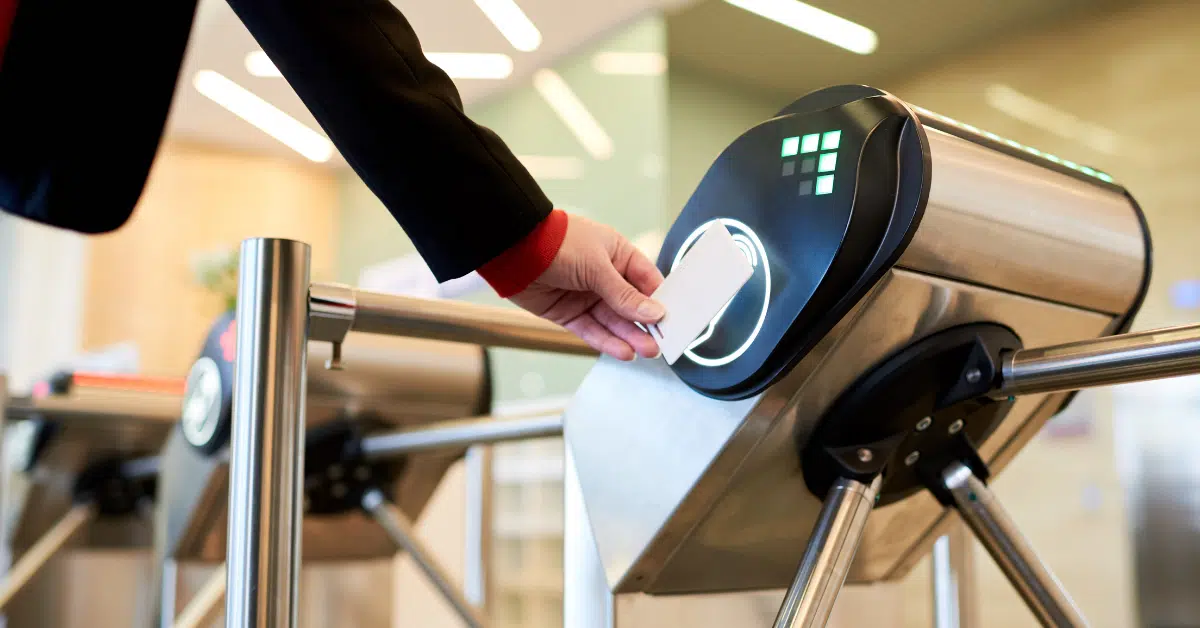
Each one relies on a physical object that will interface digitally with the gym or fitness club’s security system. From there, this physical object’s digital signature will confirm that the member is entitled to enter the facility and open the access control system for them. 

  • RFID, or Radio Frequency Identification cards, have become a staple of not only gyms but office access control. A small, credit card sized card that is pressed against a scanner for a few seconds. We will go over the main drawback with these cards at the end of this section, but compared to their magnetic counterparts they are largely considered reliable and hard-wearing due to their functionality being internal.  
  • Magnetic Swipe Cards are very similar in concept but rather than being pressed against a pad they are ran through a card reader. This is essentially a different method of interfacing. While popular, we have seen their popularity diminish somewhat due to a tendency to ‘de-sync’. Given these cards are often stored in magnetised wallets or phone cases, this has led to two different issues.

    One is that the magnetic stripe becomes scratched away due to repeated use.

    The latter is that the magnetic stripe becomes compromised by the magnetic wallets and phones that they are now commonly stored in. 


  • And finally we have the ‘key fob’. Used by everyone from office blocks to apartment blocks, these little balls of hardened ABS plastic essentially opt to store the aforementioned digital signature in something a little more unorthodox than a card. Normally worn on a keyring, they are exceptionally hard-wearing. Given that the scope for customisation is greater than a card, they have become quite popular amongst independent gyms as a method of free advertising. Of the three ‘physical-digital’ hybrid methods, they have the greatest aesthetic potential. 

 The main appeal of these methods is their simplicity. Their function is easily understood, even if an independent gym or fitness club isn’t appealing to the most tech-savvy crowd. Short of the aforementioned de-magnetisation, the scope for them to fail in their functionality is very limited. They are easily portable and often kept in items such as wallets and keyrings that are hard to forget.

In terms of our digital feedback check, they pass with flying colours. Each will be specific to the gym member in question, and with a suitably sophisticated club management system and software, it will give all the necessary feedback and data straight to a BI dashboard. 

 Furthermore, a branded membership card or stylised key fob can easily be made to reinforce brand identity. If the entry solution to an independent gym or fitness club is simultaneously aesthetically appealing and effortlessly easy, the membership will rightly build a positive connection with the brand. A positive reinforcement loop will start to occur where they associate the keyfob or card with the efficiency that the gym offers on the door. 

 With all that being said, there is one key (excuse the pun) issue with these fobs and membership cards.

 As physical items, they are susceptible to being lost and/or stolen. Both situations are unfortunate, requiring the card to be cancelled, lest the security of the gym or fitness club be compromised. 

It is also a method that is very prone to ‘access-sharing’, where people attempt to give out their keyfob or access card to their friends. While staff can be briefed on this, it is ultimately very hard to enforce as it requires the checking of cards. This can feel like a violation of trust to members who are just quietly going about their day.

Once cancelled, the keyfob or card must be reissued. This means keeping a physical supply that has to be given out. In turn, the decision then becomes ‘should members be charged for losing their card, and if so, how much?’. While these are not insurmountable questions, they can cause a degree of hassle for both gym members and gym staff. We would recommend that if an independent gym is considering adopting a key fob or RFID/Magnetic card system, that the management reflect on how these situations will be dealt with, as well as ascertain the cost of maintaining a supply of the cards/fobs. 
Barcode and QR Code Scanners

The barcode and its pseudo-successor, the QR code, are ubiquitous in modern society, especially in the wake of the Covid-19 lockdowns. Though these are nominally two very different technologies from two different time periods, we have lumped them together for simplicity given that their distribution and functionality are largely interchangeable.

With the number of QR codes generated now running into the hundreds of billions, it is safe to say a few industries have found a way to utilise them! These codes are usually either generated on or sent to a phone application. In specific, more low-tech instances they can also be sent via e-mail. 

 Both barcodes and QR codes are used the world over, and the fitness industry is no exception. Many independent gyms have latched onto these scanners as a cheap, purely digital alternative to cards and keyfobs. 

 By removing the reliance on human input, these codes are able to effortlessly transfer a passcode to the access control system, satisfying the criteria for entrance while requiring a digital footprint for our aforementioned data efforts. 

 Without the need to physically buy, monitor and replace an item such as a card or a keyfob, this system is cost-light and ultra-efficient. It can even be counted towards reducing a carbon footprint, with the diminished use of physical materials!


Ultimately the QR codes and barcodes, while simplistic, are ultimately effective. With the appropriate digital infrastructure behind it, these codes achieve an efficient, easy-to-maintain digital access solution for any independent gym or fitness club.

 With that being said, they are not infallible. There is always the risk of members forgetting their means of access, their phones running out of battery, breaking or otherwise being corrupted. In addition, they are not the most intuitive for the technologically illiterate and may require some explanation that could put off older or more luddite-leaning gym members.

Furthermore, this method is very prone to ‘access sharing’, something that plagues many independent gyms and fitness clubs. 
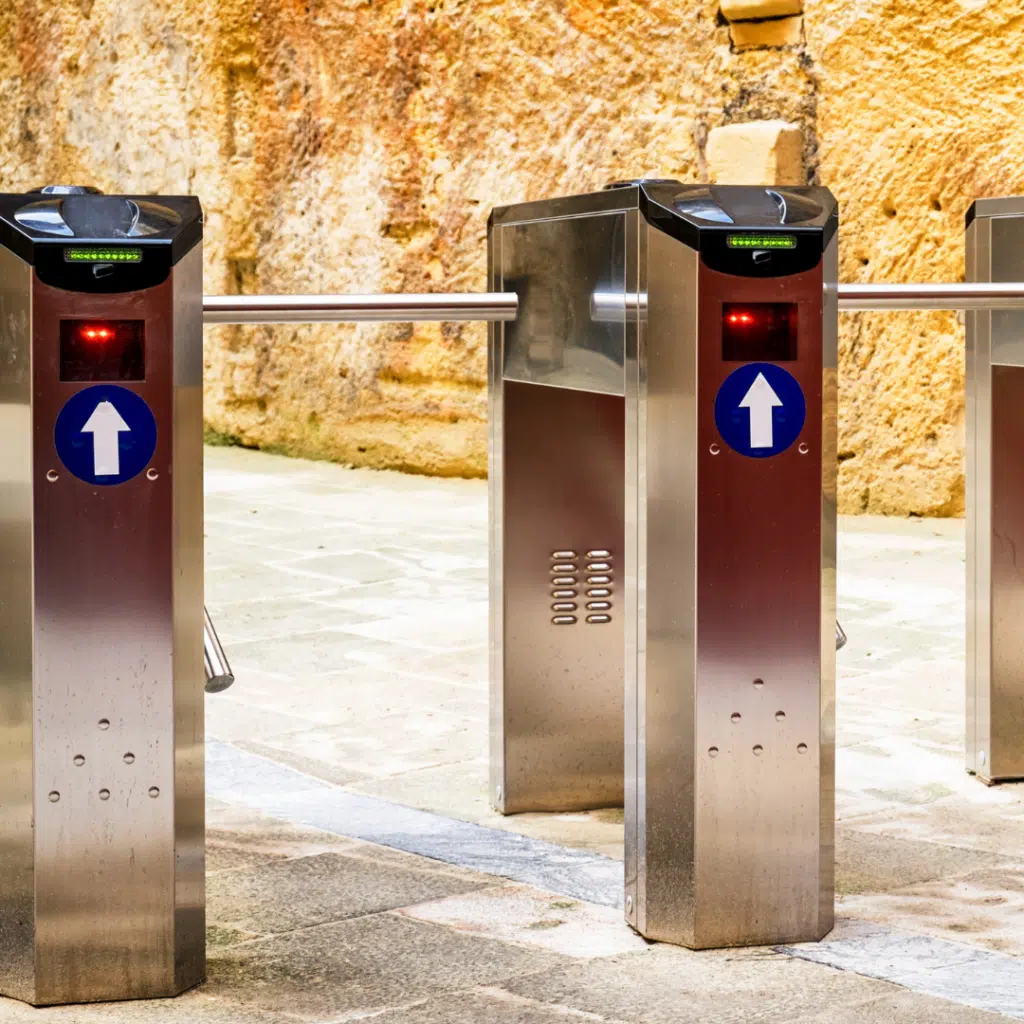
Biometric Scanners

So while the biometric scanner fulfills the same essential function as our other two categories of access control for independent gyms, it does so in a much more futuristic way. By relying on something a gym member (hopefully!) always has on them, their finger. 

 While the initial effort to collect biometric data and the machinery necessary to use it makes this the most cost-intensive method, the technology has become a lot more accessible and widespread. This can be most evidently seen in life through the rising prevalence on mobile phones. Once seen as a luxury feature, now even budget models come with fingerprint scanners. 

 While the setup can be more laborious, the payoffs are undeniable. Independent gyms and fitness clubs that invest in biometric scans will adopt an access control system that is easy to use, impossible to forget and unnecessary to replace. 

 If that isn’t enough of a benefit, this solution also provides the most effortless and satisfying experience providing that the biometric scanners are correctly maintained. Few other solutions feel as futuristic or secure. If an independent gym or fitness club is trying to reinforce the values of its brand via its access control system, we could not recommend a better solution. 

 Furthermore, it is a system that is basically unable to facilitate the access sharing that has plagued the previous two options that we have investigated. 

Section 2: Physical Club Entry Mechanisms and Systems

Now that we have gone through all of the verification methods that we would recommend to one extent or another that can be utilised by an independent gym or fitness club, it is time to look at the other side of the coin. 

Namely, what is the physical mechanism stopping non-members from getting in and whether your members are trying to by-pass with a gym’s access control verification system of choice. 

 We will be looking into quite a few options here, ranging from the expensive and all-conquering, to the simple and functional.

 Keeping in mind what we explored at the beginning of this article, that in this post-covid, post-energy crisis bigger is not always better when it comes to the independent gym on a budget.

 But without further ado, let us explore the second half of the puzzle that is access control. 

Speed Lanes

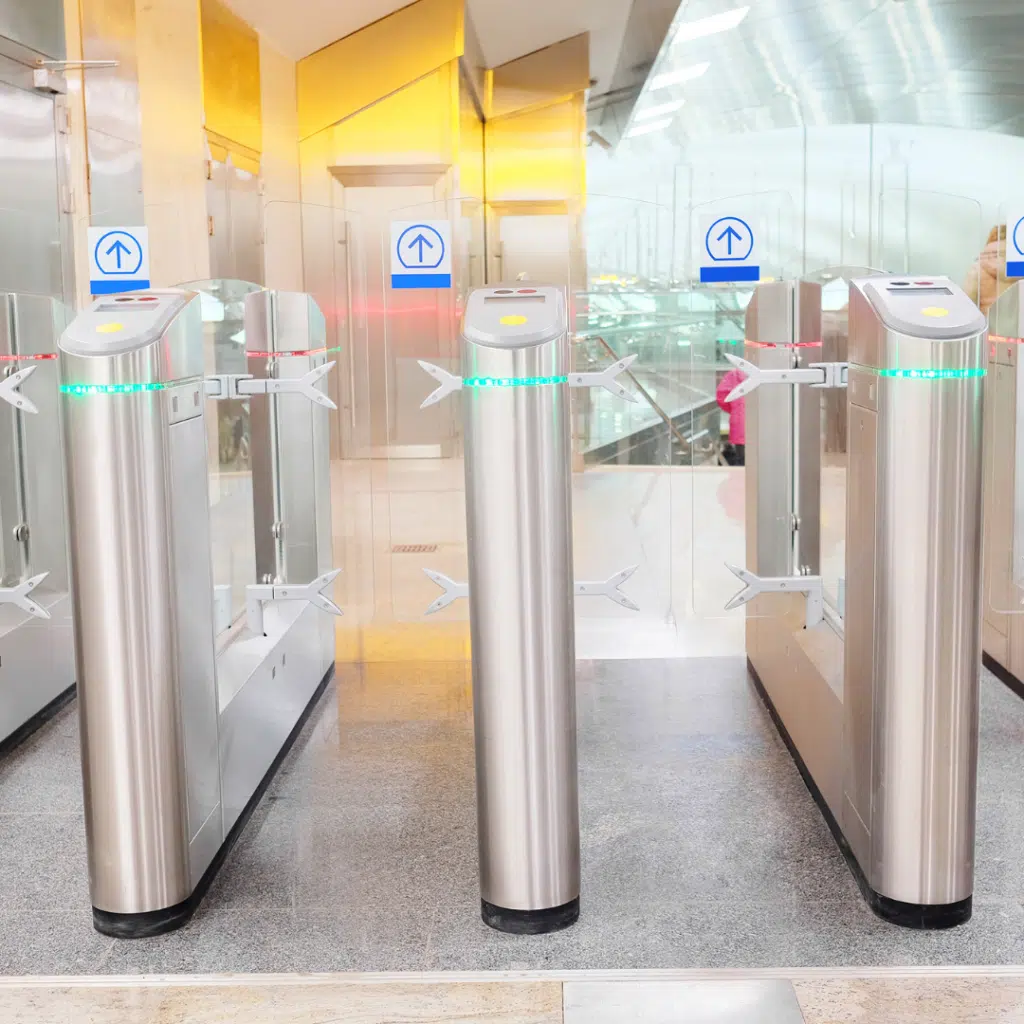
Starting with one of the more recent access control mechanisms that have been springing up across the fitness industry, we have the Speed Lane system. Designed more for efficiency than security, the speedlane is a light-weight option emphasising aesthetic and ease of use over cast-iron might. Speed is the name of the game…And the lane. 

 Pros

Designed specifically to feel like a premium experience, speed lanes take inspiration from existing airport security mechanisms. In an age of near-instance everything, the speed lane is supposed to make the gym member feel like the process was near effortless. A small, quickly withdrawn plastic or metal gate will present a small obstacle before the card is presented, only to be whisked away without the member needing to break stride, ideally. 

Unlike some of the other solutions that will feature on this list, they are not an eyesore, and can be used to fully showcase an open and aesthetic workout space. This is the access control solution that feels most suited for the generation that has latched onto terms like ‘Zoomer’. Speed, convenience and efficiency is of the essence. 

Cons

Unsurprisingly, all that talk of aesthetic and efficiency comes at a cost. A comparative lack of security.

Or rather, a need for additional security measures perhaps. Speed lanes are relatively easy to circumvent and we would not recommend them as the only security solution an independent gym or fitness club uses, especially if they are a 24/7 enterprise.

The ideal place of use for speedlanes is a traffic-heavy gym or fitness club in a relatively secure area that operates purely within daylight/business hours. As such, we would only recommend the speedlane as a specific solution for a specific type of gym, not a catch-all solution. 

Swing Gates

Our next access control system that independent gyms can utilise, the Swing Gates, represents a more secure alternative to the Speed lanes. Though, as some might have guessed, at the cost of some speed. 

 These gates are spacious, which is of course, a double-edged sword. They provide relatively quick and easy access whilst allowing a motorised system to ease the passage of members into the facility without need for them to interact with the gate itself.

 Pros 

The Swing Gates have several benefits. They are material light, cheap to maintain and easy to repair. Their spacious design allows people with mobility issues or disabilities to navigate through them much easier. This is the cheapest solution that also benefits wheelchair users. 

 If an independent gym or fitness club is looking to prioritise accessibility, the swing gate should definitely be an avenue that is considered. When compared to the turnstile, it offers a much more reliable situation. While some may require assistance, the number will be significantly reduced. We have even seen some gyms utilising a singular swing gate as an option for those that have accessibility issues. 

 Cons 

With that being said, all this accessibility does lead us to the other side of that double-edged sword. It is very hard to recommend swing gates as a solution for a 24/7 gym or a gym that will not, in some capacity, have their access control system manned and monitored.

Tripod Turnstile

The archetypal three-prolonged turnstile needs little introduction. Perhaps one of the most ubiquitous access control systems in the world. Over a century old and utilised the world over, our question becomes:

 Is it a viable solution as an access control system for independent gyms and fitness clubs in the post-lockdown, post-energy crisis 2023 and beyond?

 Pros

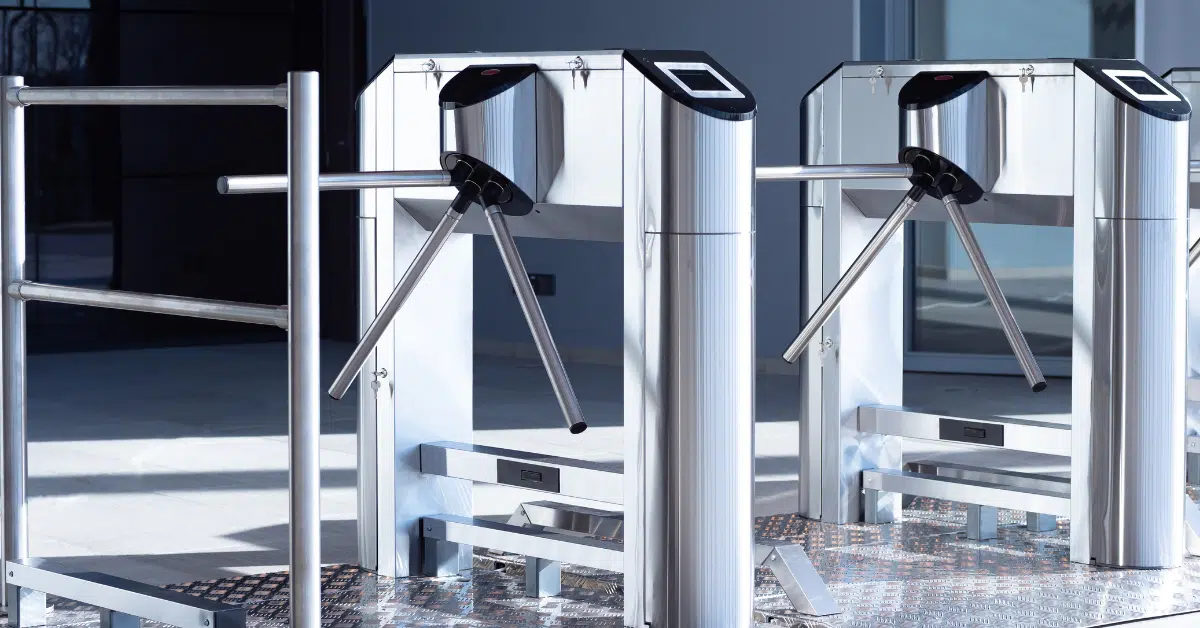
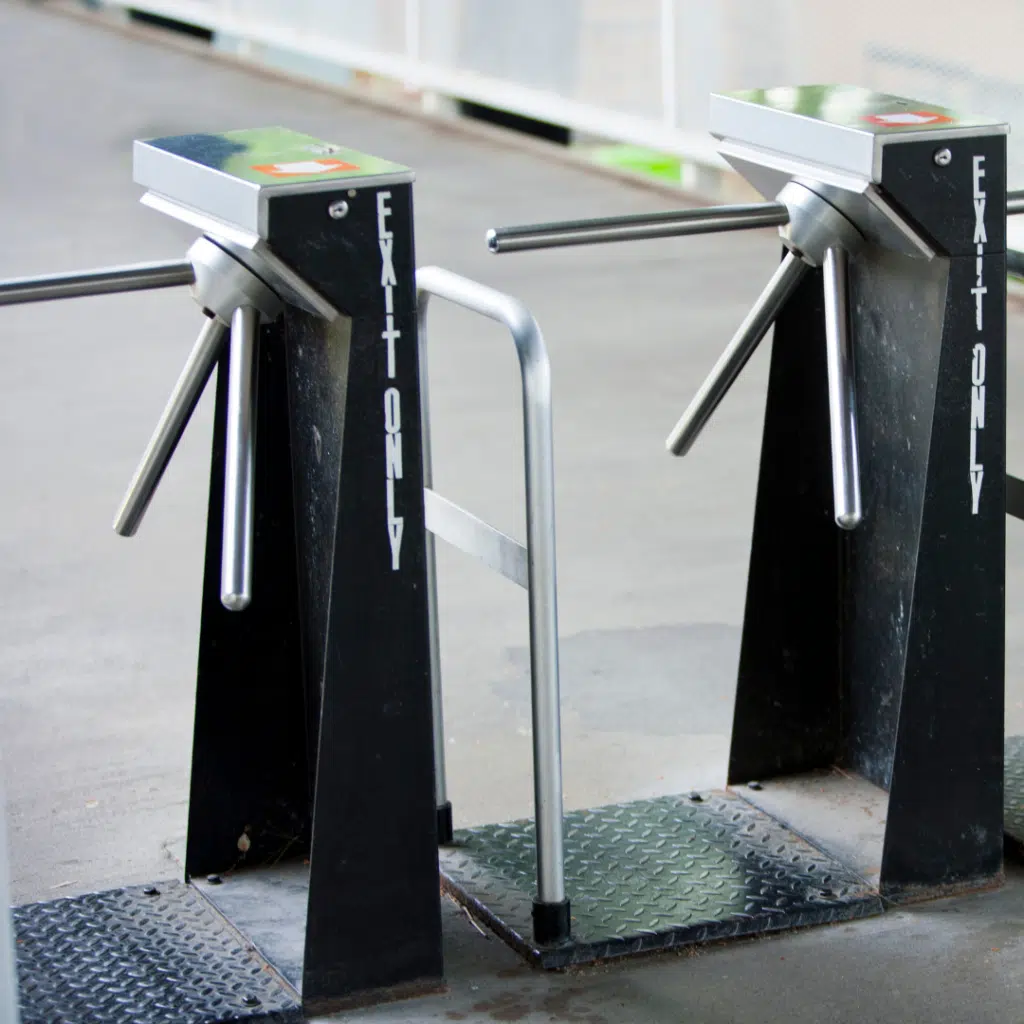
As the saying goes, it is a classic for a reason. The tripod turnstile is hard-wearing, hard to break and easy to fix. It is a system that is instantly intuitive and uses space efficiently.

 Indeed, when compared to more heavy duty solutions, the tripod turnstile can easily come out on top in terms of cost, space and usability. 

 It is little wonder then that the tripod turnstile has become the staple that it is. When combined with low running costs, it is a system that is remarkably well suited to the post-energy crisis UK and Europe. What goes around comes around we suppose!

Furthermore, the installation of these systems is relatively straightforward and can be adapted to even the most compact gym or fitness club setups. As such, it is no wonder that it is the go-to choice for independent gyms and fitness clubs working on a budget and just starting up.
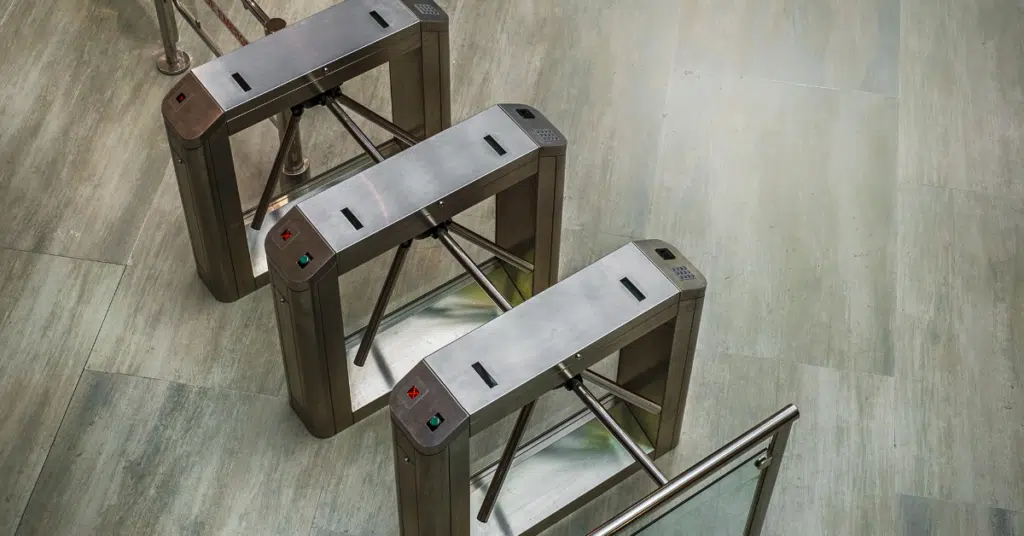
tripod turnstiles

Cons

Unsurprisingly, all that talk of aesthetic and efficiency comes at a cost. A comparative lack of security.

Or rather, a need for additional security measures perhaps. Speed lanes are relatively easy to circumvent and we would not recommend them as the only security solution an independent gym or fitness club uses, especially if they are a 24/7 enterprise.

The ideal place of use for speedlanes is a traffic-heavy gym or fitness club in a relatively secure area that operates purely within daylight/business hours. As such, we would only recommend the speedlane as a specific solution for a specific type of gym, not a catch-all solution. 

Full Height Turnstiles

Speaking of ‘jumping the turnstile’, here is one that even an olympic high-jumper might struggle to overcome.

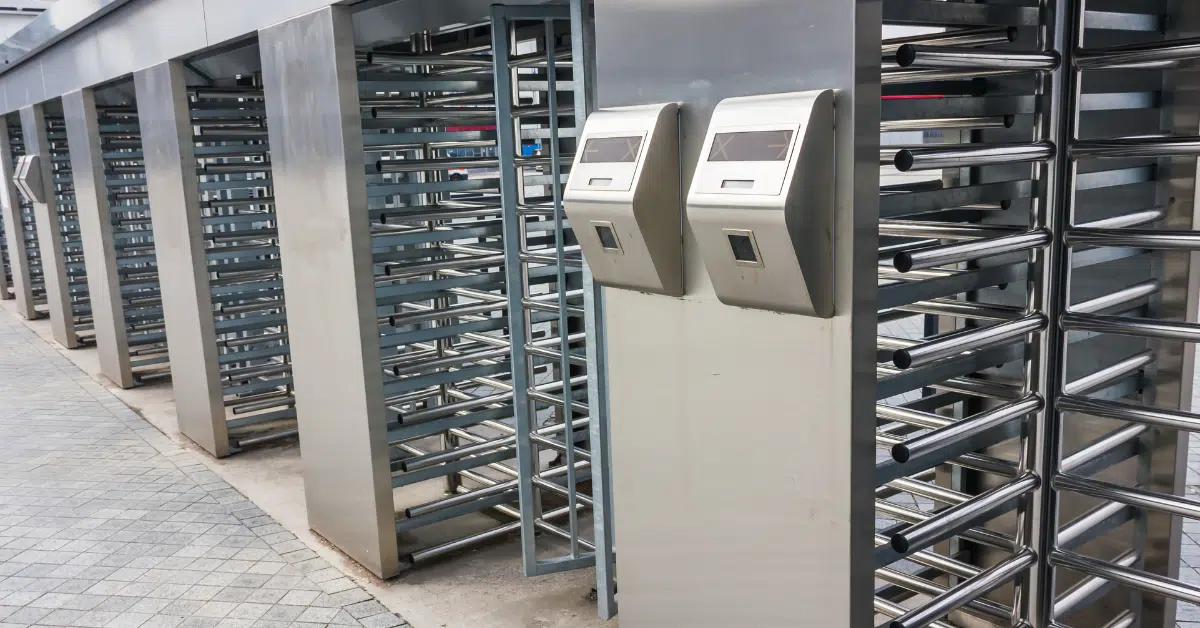
 Whether they go from floor to ceiling or merely stand at an imposing 2-meter-plus height. The full-height turnstile has become the emblem of access control for the 24-hour gym or fitness club. As such, we’ve seen both these systems rise in tandem, each helping the other succeed.

Has this beneficial relationship come to an end with the partial retreat of the 24-hour gym that has been witnessed over the last two years? Or is this only a temporary trend, quickly being undone? Time will tell, and we shall leverage our expertise to explore just what is in store for the full-height turnstile. 

 Pros 

Able to offer unparalleled security whilst allowing for comparative ease of access. The full-height turnstile is an obvious candidate for the ‘heavy duty’ solution to gym access control. It is a striking statement of intent, a dedication to security, and a true investment.

The durable, all-encompassing nature of it means that it is one of the only access control solutions that offers full peace of mind while unmanned in a 24/7 gym or fitness club. 

 It all but ensures that the only way that a person is getting into the facility is with the appropriate verification method.

 This is important to reassure both the management of a gym and the members. If someone is working out at 3am, they want to know that only the people who have paid to be within a facility can get in. 

 Finally, and perhaps what has given it a critical edge, is the relative ease of passage once verification has been provided. The full-height turnstile mechanism, for all of its bulk, is often easier to navigate than a more traditional turnstile. 

 Cons

So while the full-height turnstile is a fantastic solution for certain independent gyms and fitness clubs, specifically 24/7 facilities, that does not mean it is a catch-all solution or a silver bullet solution.

 The fitness industry is complex and the answer to the best access control system is not as simple as merely purchasing the biggest option on the market. 

 And indeed, one of the key downsides to the full-height turnstile is cost. It is an expensive solution and one that will require more maintenance than cheaper options were they to break.

 Furthermore, accessibility is another casualty. Unlike the much cheaper swing gates, not everyone will be able to comfortably navigate the full-height turnstile.

And lastly, space is a large consideration. Both in width and length, the full-height turnstile will take up significant room and will take time and space to install. 

As such, while many independent gyms and fitness clubs should seriously consider the full-height turnstile as their access control solution, it is not a given. This is not one of those listicles where you can scroll to the bottom to get the best solution.

But with that being said, to many independent gyms and fitness clubs looking for security as they implement 24/7 or unmanned solutions, the full-height turnstile will be invaluable!
Our Access Control Roundup

And so the conclusion? If you’ve been reading then it should be apparent. Independent gyms and fitness clubs are so varied and specific (in fact it is one of their greatest strengths) that the answer was always going to be multi-faceted.

With that being said, we hope as the article has progressed that it has helped to eliminate certain solutions for certain requirements and parameters. For example, the 24/7 hour aspirant should now be fairly assured of the type of access control system that will most benefit a 24/7 gym or fitness club. 

 Furthermore, we hope that this look has reinforced how each system can help enhance the brand and image that an independent gym or fitness club is trying to project. Whether it is with an effortless speed lane or a hi-tech biometric scanner, each piece of equipment and verification method that we’ve gone through communicates something different.

 The significant number of variables means that the best access control solution for one gym might not be the best for its nearest competitor. Whether it is based on the demographics that frequent the gym or fitness club, the space available, the opening hours or the number of staff members.

 What this article hopes to achieve is a framework to interrogate each of those solutions in a constructive way, as presented by a company that has helped install thousands of them over the last 25 years.

 If you are a new or veteran independent gym or fitness club owner with a desire to refresh, upgrade, or install the best access control system entry system for your facility, please do not hesitate to reach out and contact us.

Here at Ashbourne, we’ve been working with these systems for over twenty-five years, and with that twenty-five years come a level of confidence and dynamism that is hard to match. Our goal is to work with all of our independent gym and fitness club partners to deliver the solution that is correct for them, whether it is a verification system, access control system, or both! 

 Whether your gym is in a busy city centre or purely targeted at the older denizens of a small town. Whether it never shuts or operates in a very specific window. We are confident that our experience and expertise will give us an advantage in finding the best solution for your gym at the best price. Furthermore, our industry-respected club management software can help use this equipment, turning member access into meaningful data that can influence the very fabric of an independent gyms operations. 

 Don’t hesitate to arrange a demo with our team today on the following link! 

More to Read...

Get your club in shape.

Want to discover how? Let us show you.

Simply select your preferred timeslot and we’ll be in touch to have a chat about your health club,
the goals you want to achieve, and how our system can help you.

Get your club in shape.

Want to discover how? Let us show you.

Simply select your preferred timeslot and we’ll be in touch to have a chat about your health club, the goals you want to achieve, and how our system can help you.

Get your club in shape.

Want to discover how? Let us show you.

Simply select your preferred timeslot and we’ll be in touch to have a chat about your health club, the goals you want to achieve, and how our system can help you.

4 Reasons Why Your Fitness Club Needs a Turnstile System

Over the course of a week, your club experiences a significant amount of footfall.

Without an effective entrance solution in place however, inefficiencies occur and problems arise when it comes to managing memberships. More pressingly, it becomes difficult to track who’s entering your club and ensuring that your facility stays safe and secure.

Installing a turnstile system is an effective and affordable way to overcome these problems and provides a low maintenance and affordable solution to make your club run more efficiently, effectively and, ultimately, profitably.

To help illustrate this point further, here are some compelling reasons why your club should consider investing in Ashbourne’s Access Control system…


1. Profitability


This is perhaps the biggest reasons to invest in a turnstile at your fitness club. By implementing this technology into your building, you’ll no longer need someone on reception throughout the day. As a result, this will not only save money on wages, but it will eliminate any non-members from getting past the reception when it isn’t being manned. At Ashbourne, we offer a range of turnstile options to meet the needs of your club so that you can rest assured that the system you choose will deliver the best results possible when it comes to making long-term savings.


2. Utilise staff elsewhere


By removing the need for a member of staff at reception, you’ll be able to utilise their skills in other areas of the business.

This can include:

• Keeping on top of maintenance duties for an improved member-experience.
• Offering a wider variety of classes at different times for members.
• Providing extra PT and one-on-one sessions.
• Focusing on improving your club’s marketing and customer acquisition.


3. Improved membership management


Keeping tabs on non-paying members and monitoring customer behaviour is extremely difficult if you haven’t got a turnstile installed. With fitness clubs often requiring its staff to attend to a number of different tasks throughout the day, membership management usually takes a back seat.

A turnstile is a simple solution. Instead of requiring a member of staff and a computer system to check membership and register a customer’s time of arrival, a turnstile will automatically do this via its access control system. Providing a customer’s membership is valid, up-to-date and approved, the gate will then open. Furthermore, our Access Control solutions link seamlessly to Ashbourne’s Club Software giving you valuable insights into member usage and behaviour at the click of a button which you can use to your advantage to improve retention and deliver maximum value to your customers.


4. 24/7, around-the-clock access


Another great way of boosting sign-ups and improving customer satisfaction is by granting your members access to your club around the clock.

Not everyone wants or is able to use your club during more ‘conventional’ hours. A 24/7 service is a highly attractive prospect for your current members and prospects alike and enables you to provide a real selling point which will ultimately help to drive more sales.

What’s more, it might help reduce overcrowding in your fitness club at peak times as well. In fact, in a recent survey, 25% of Brits said that they’ve gone to the gym and couldn’t use the machines they wanted to because of this issue.

Instead, opening your fitness club up for 24/7 access might encourage peak members to go later in the evening or earlier in the morning. This flexibility will of course drive satisfaction levels up and help to increase retention.


How to choose the right turnstile for your club.


If you do want to invest in a turnstile at your fitness club or leisure centre, it’s essential that you choose the right one.

Here at Ashbourne Membership Management, our Access Control solutions can include RFID technology for added entry control, seamlessly integrate with our membership management software and comes with unlimited support from our team of engineers.

Simply put, it provides a simple but truly effective way to easily transform your club into a 24/7 facility without any fuss or receiving unwanted 3 am calls from members having trouble gaining access.

To find out more about our turnstile and access control systems, simply get in touch with us today and a member of our team will be happy to help.

Let Us Help Drive Your Business Forward...

Book your free demo slot and let us show you how
we can help take your gym to the next level.